
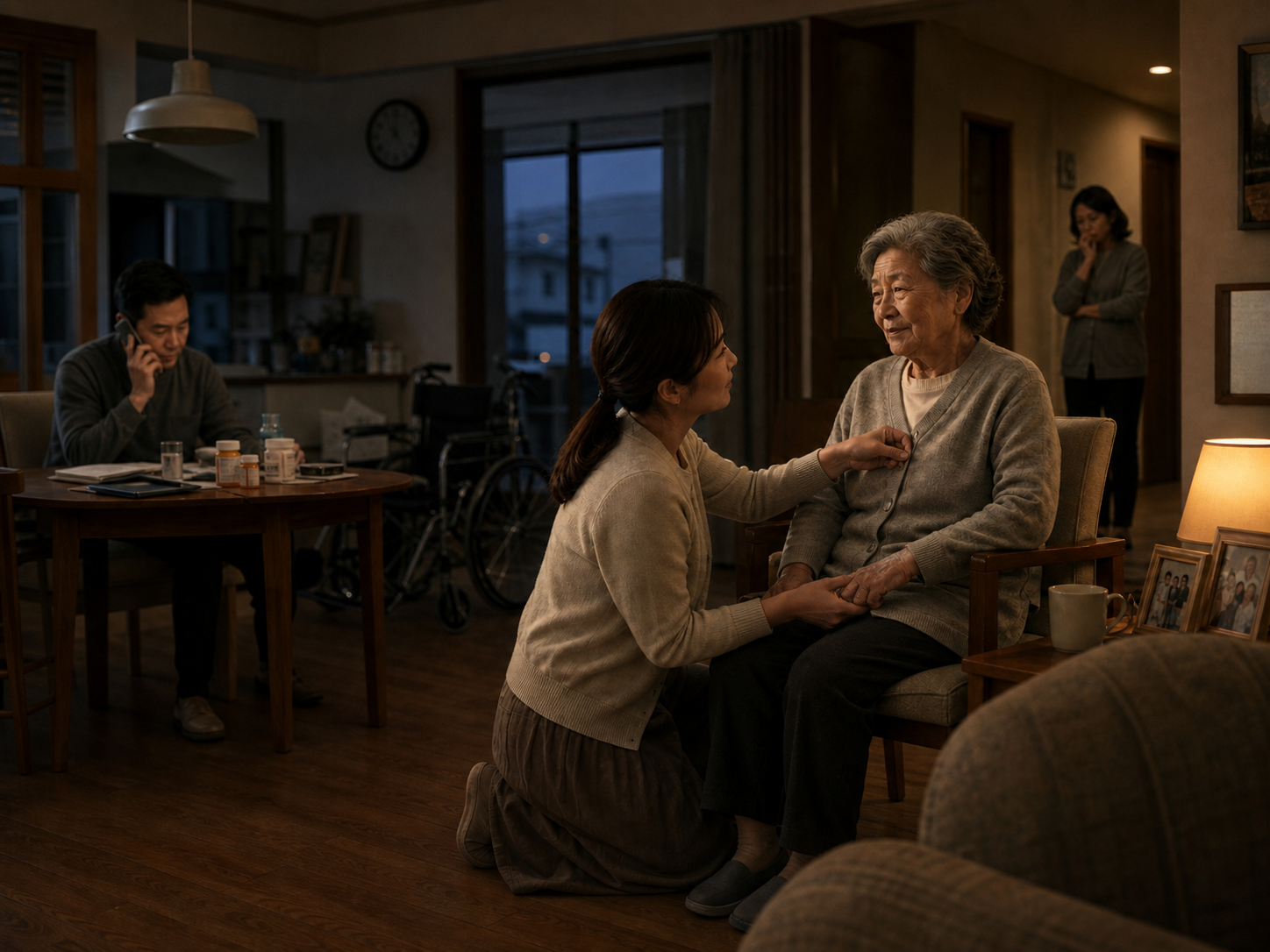
Just read Malai Hassan Othman’s (MHO) latest piece, “When Mum Can No Longer Be Left Alone,” and it hits close to home. I see the real struggles families here are going through with this, and it has made me think hard about how unprepared most of us are for this stage of life.
There is an old Asian saying that captures it perfectly: “One mother can look after 10 children, but 10 children can’t look after one mother.” It sounds harsh, but anyone who has actually watched a family go through a parent’s decline knows it is simply true. Care that once flowed naturally, almost invisibly, from one person to many, does not flow back the same way. It gets divided, negotiated, sometimes resented, and too often left to whichever sibling happens to be closest or has the fewest excuses.
MHO’s piece frames this as a policy and systems problem, and he is right. Brunei’s population is ageing quickly, our extended family structures are already thinner than a generation ago, and the informal safety net we have always relied on, daughters, daughters in law, whoever is available, is stretched further every year. We do not yet have the community based care infrastructure, respite services, or trained home care workforce that a serious ageing strategy requires. Families are quietly absorbing a cost that should be a shared national responsibility.
But there is a layer underneath the policy conversation that does not get enough airtime, and it connects to something I wrote about before on the silence we mistake for strength. The emotional toll on caregivers, usually one or two people in the family who carry the disproportionate share, is enormous and largely unspoken. Exhaustion, guilt for feeling exhausted, grief for a parent who is still alive but not who they used to be, resentment toward siblings who show up only in the easy moments. None of this gets said out loud in most Bruneian families because it feels disrespectful to admit. So it gets buried, and it shows up later as burnout, strained marriages, or caregivers who neglect their own health until they become the next patient.
If I am honest about what needs to change, it is two things happening at the same time. Government needs to move from goodwill statements to an actual funded framework, home care subsidies, trained caregiver support, accessible respite care, and clearer coordination between hospitals and community health services so families are not left to figure out discharge planning on their own. And families need to have the uncomfortable conversation early, who does what, how it gets shared, what happens when one person cannot cope anymore, instead of waiting for a crisis to force the conversation.
The biggest lesson from watching this play out around me is that care work is real work. It deserves the same planning, resourcing, and honesty we would give any other serious responsibility. Brunei has time to get ahead of this if we start treating elderly care as a shared national priority now, not once every family has already learned the hard way.
Grateful to MHO for putting this into words so clearly. Worth a full read.