
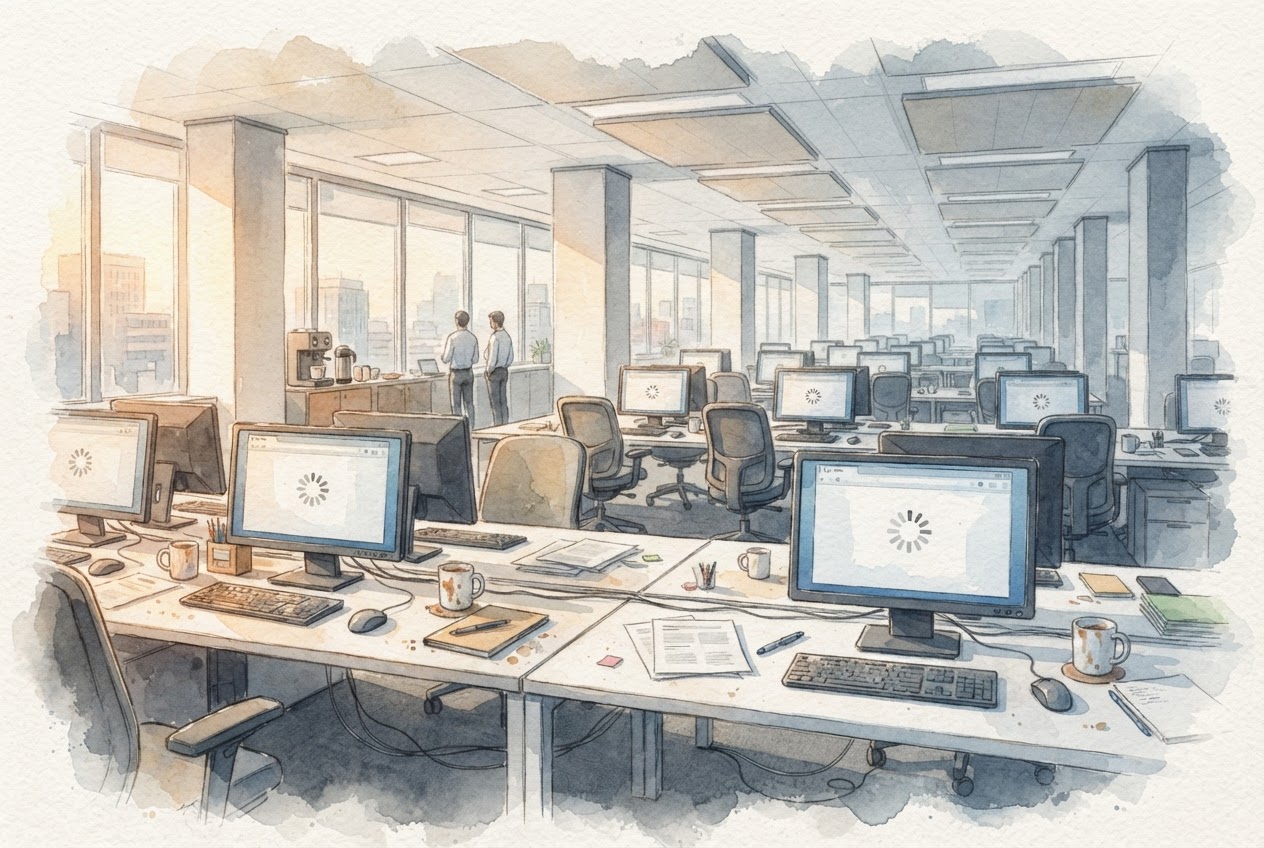
This morning our office came close to a standstill. No email, no Teams, no shared files. People sat at their desks with plenty of attention to give and nothing to give it to. I watched capable colleagues wait for a status page to tell them when they could be useful again.
My weekly one to one was a small example. We normally update our Microsoft List together, live, with both of us looking at the same page as it changes. This morning we did the updates manually instead. It worked, just more slowly and with more room for mistakes, and it made me realise how much of our routine had quietly moved onto that one platform without anyone deciding it should.
Having spent years around telecoms, I know systems fail. What struck me was how ordinary the cause sounded. Microsoft said servers were failing automated health checks, and it disclosed no evidence of a cyberattack. A core process that sets up secure connections was becoming overwhelmed. A routine fault inside one company’s infrastructure was enough to stall offices around the world, ours included. I find that more unsettling than a dramatic attack would have been.
On the very same day, Nvidia announced that Jensen Huang had resigned as CEO, effective immediately. That does not touch our operations, but the two stories sit close together in my mind. Both show how much of the modern economy rests on a handful of companies, and sometimes a handful of people, that the rest of us assume will always be there.
I don’t fear that Microsoft stumbled, because every provider does eventually. What worries me is how little we had to fall back on when it happened. Over the years, convenience quietly replaced contingency. Email, calendars, files, approvals and meetings all sit behind one login, so when that door shuts, the whole building goes dark.
There is a harder question for anyone running a team. If a job had been due to a customer today, would the outage have been our excuse or our explanation? Customers will not mark us on our vendor’s uptime. They mark us on delivery.
So the lesson I am taking back is a practical one. Know which processes cannot stop, and decide now how they would run without the cloud. A phone tree, offline copies of the files that matter, and one named person who makes the calls would be a good start. Then test it before the day we need it, and treat it as a management job rather than something to leave with IT.
The cloud is staying, and I would not want it any other way. But relying on it without a plan is just hoping for the best.