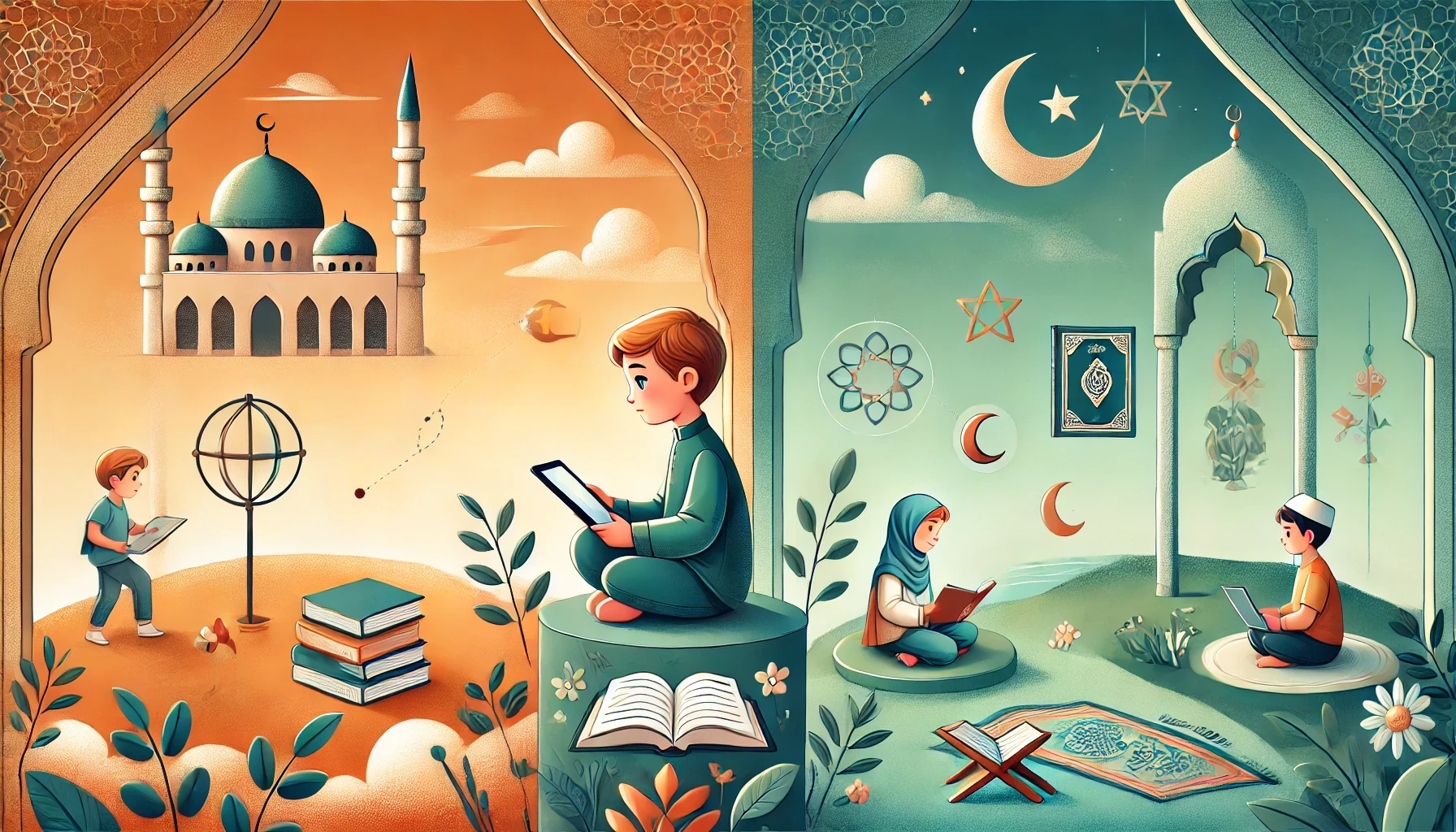
In today’s world, where children are increasingly exposed to digital influences, teaching them the timeless values of adab (etiquette) and akhlak (moral character) can feel like an uphill battle. From YouTube to TikTok, kids are bombarded with content that can shape their worldview in ways parents and educators may not even be aware of. How do we, as guardians of the next generation, ensure that they grow up with strong moral foundations in an era of constant distractions and screen time?
The good news is that adab and akhlak can still be instilled—perhaps more crucially than ever. By integrating these values into everyday life, parents and teachers can help children navigate the digital world with a moral compass that not only reflects Islamic teachings but also equips them to become compassionate, respectful, and responsible individuals.
1. Start with the Basics: Leading by Example
Children learn by watching the adults around them. Whether it’s how you greet a neighbour or handle a difficult conversation, they pick up on cues. In this sense, the most effective way to teach adab and akhlak is to embody these values in your own actions. When children see you treating others with kindness, speaking politely, and being honest, they are likely to follow suit.
In the digital age, this also means demonstrating proper online etiquette. Show them how to engage respectfully with others on social media, and discuss the importance of verifying information before sharing it. By modelling good behaviour both in real life and online, you’re laying the groundwork for them to follow.
2. Be Selective About Digital Content
While there are certainly many pitfalls in the digital world, there are also countless resources that can enhance a child’s understanding of adab and akhlak. Islamic cartoons, children’s books, and educational apps that incorporate moral lessons can be wonderful tools. These platforms often simplify complex concepts of Islamic etiquette and morality, making them digestible for young minds.
Make it a habit to vet the content your child consumes. Set up filters to limit access to inappropriate material, and actively engage with them about what they watch. Ask questions like, “What do you think about that character’s behaviour?” or “Is that how we should treat others?” This not only makes them think critically but also reinforces the concept of akhlak as something they encounter in everyday scenarios—even online.
3. Teach the Principles of Sabr and Shukr in Everyday Life
Two of the most vital concepts in Islamic character-building are sabr (patience) and shukr (gratitude). Teaching children to practise patience is especially important in the digital age, where instant gratification is just a click away. Whether it’s waiting their turn, learning to persevere through challenges, or delaying rewards, the concept of sabr builds resilience.
Similarly, instilling a sense of shukr or gratitude can help counterbalance the materialistic and comparison-driven culture of social media. Encourage your children to focus on the blessings they already have, rather than what others may have. This could be as simple as starting a family gratitude jar or having them list three things they’re thankful for at the end of each day.
4. Set Clear Boundaries Around Screen Time
While it’s impossible to shelter children from screens entirely, setting boundaries is essential. Overexposure to digital devices can weaken a child’s sense of reality and erode their social and communication skills. It’s vital to strike a balance between online and offline activities.
Implement family rules around screen time, particularly during meals, family gatherings, or prayer times. Encourage alternative activities such as reading, outdoor play, or participating in acts of service, where they can apply adab and akhlak in real-life interactions. Through these experiences, children learn that relationships with others and their surroundings are built on respect, compassion, and responsibility.
5. Discuss the Consequences of Bad Adab Online
One of the more challenging aspects of the digital age is the anonymity it offers, which can lead to bullying, harmful comments, or disrespectful behaviour. Children may not fully understand the consequences of their online actions, as they don’t see the immediate reactions of those they hurt.
It’s important to explain to them the concept of accountability in Islam. Just as our words and actions in person carry weight, so do our digital interactions. Encourage empathy by asking them how they would feel if they were on the receiving end of hurtful comments. Reinforce that adab applies not just in physical settings but in online spaces too.
6. Incorporate Islamic Stories and Teachings
Children love stories, and Islam is rich with narratives that exemplify moral character. Introduce them to the stories of the Prophets, companions, and other Islamic figures who exemplified akhlak and adab. The life of Prophet Muhammad (PBUH) is full of lessons in kindness, humility, and patience, which are easily understood and relatable for children.
Through these stories, children learn that adab is not just a set of rules but a way of life that defines how they interact with the world. It’s the same whether they’re dealing with friends, family, or strangers, both in person and online.
Conclusion
In the digital age, teaching adab and akhlak to children requires more than just words—it demands consistent effort, conscious modelling of behaviour, and the use of the very digital tools that shape their daily lives. While technology has introduced new challenges, it has also provided opportunities for us to engage with our children in meaningful ways. By nurturing their moral compass early, we give them the tools to navigate life with integrity and compassion—both online and offline.