
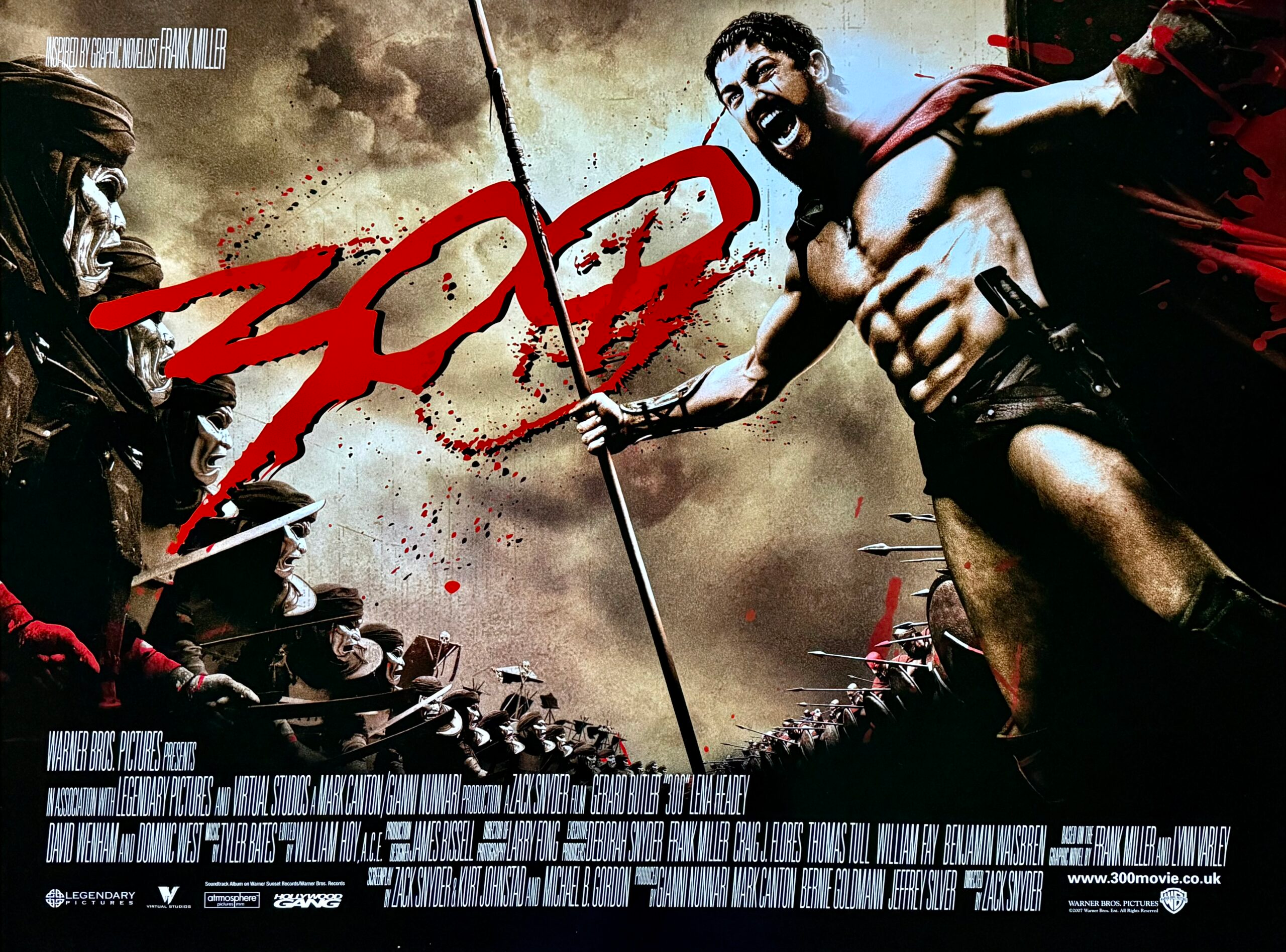
Da missus and I finally got around to watching 300 after several failed attempts.
By now, there’s probably little left to be said about the movie itself. The cinematography was striking, the visuals memorable, and the storytelling unapologetically larger than life. It is one of those films that knows exactly what it wants to be and commits to it fully.
What stayed with me afterwards, however, was not the movie.
It was the audience.
Scattered around the cinema were children — some very young — watching scenes filled with graphic violence, mature themes, and imagery clearly intended for adults. It made me pause and reflect on something we often overlook.
Movie ratings exist for a reason.
They are not there to spoil anyone’s fun. Nor are they a challenge to see how creatively we can work around them. They are simply a guide — a reminder that certain content requires a level of maturity, context, and understanding before it can be properly processed.
The reality is that children rarely see things the way adults do.
A scene that an adult dismisses as fiction can become a lasting image in a young mind. A moment intended to demonstrate corruption, betrayal, or moral weakness may instead be interpreted as something admirable or normal. Children absorb far more than we sometimes realise.
This is not about shielding them from the world forever.
Sooner or later they will encounter violence, difficult realities, moral ambiguity, and the many contradictions of life. But timing matters. Context matters. Guidance matters.
As parents, guardians, and adults, perhaps our role is not merely to expose children to the world, but to help them understand it when they are ready.
Parental discretion has always been one of the most powerful forms of education. Not because it controls what children see, but because it shapes how they see it.
Perhaps the bigger question is not whether a child is allowed to watch a particular movie.
Perhaps the question is whether we are prepared to have the conversations that come afterwards.
Because in the end, children are not only watching the screen.
They are watching us.
And that may be the lesson they remember most.
I agree, not being over protective, just being sensible lah, is it any wonder we have kids in lower primary who knows a lot about the birds and the bees?
I checkout the 300 website…. the Spartan soldier actors went for 6 months training… everyone got a six pack …. atu baru ia….
you and your six pack… hahahha dari dulu sudah.. haha
Thanks for pre warning bro’ … my kids bugging me to see the movie and luckily I’m reading this .. 🙂 they’re just kids man … and we’ve the utter responsibilty to protect them … jadi parent mithali lo…
I agree with preventing younger kids seeing these kinda things. But the implementation of that idea is what bothers me. I’d really hate it if they introduce a blanket legislation, meaning it covers a whole wide range when it’s only supposed to be specific.
For instance, they would just introduce the banning of all R rated or 18 and up movies from the cinemas in Brunei just so that no underaged kids can watch it. While it might seem ridiculous, but we all know it’s possible, our country just works that way.
I mean, who would want to be posted in front of cinemas to prevent kids, (who paid the entrance fee so the cinema management would care less), just so that they can’t watch R rated movies?
And that brings my next point. The cinema people can’t be given the responsibility to enforce it, it would cut down on sales.
So, maybe just be careful what you wish for. You might just get it.
Well put Souljah and I absolutely agree with you.
A blanket legislation would certainly not be in the interests of both the public and the cinema operators. Thats like throwing the baby out with the bath water. But yes, I see where you’re coming from on this one, and sadly I can just see it happening.
I can understand the cinema operators bottom line of dollars and cents, but not at the expense of moral and ethical responsibility.
Full time enforcement would not be feasible nor desirable. What I am suggesting is in line with the practice in other countries where random checks are carried out.
This would put some of the responsibility onto the cinema operators laps because the random checks will keep them on their toes. First offence, a fine perhaps and beyond a third offence, suspension of license?
Just my two kupangs worth…
Undercover detectives checking out on the cinema operators if they’re complying to the rules, perhaps? Just a thought. They would be none the wiser.
I just hope if this ever gets laid out on the Legislative Council floor, there would be voices echoing our sentiments.
When I was in the UK, barely a teenager, my parents brought me to watch a movie and it was rated 15/18. Basically, it was rated for those aged older than I was. But my point is, I was asked, when buying the tickets, how old I was. They could see I wasn’t 15/18, and they didn’t let my parents buy me a ticket.
I don’t know if this could be implemented in our country since it is small and most people would just take it into offense instead of leaving the child at home.