
Brunei is called the Abode of Peace. We have clean rainforests, oil and gas, and a way of life rooted in faith. But there is one problem we keep walking past: the number of stray dogs is growing. It is nothing new, but it keeps getting worse, so it is worth talking about again.
Here is how we got here. Stray control used to be handled by the municipal department under the Ministry of Home Affairs. Years ago, they reportedly used blowpipes and poison, carried out by hired non-Muslim native workers. It worked in the sense that numbers came down, but it was cruel, so it was stopped. The problem is that nothing solid took its place. Estimates put the number of stray cats and dogs at around 40,000 to 50,000. That means more accidents, more attacks and more disease risk, and the public health side of it is real.
For many of us, the faith question comes up straight away. Dogs are considered najis, especially their saliva, so we are careful around them. But Islam also asks us to be kind to every living creature. The Prophet Muhammad, peace be upon him, is reported to have said, “Every act of kindness is a form of charity.” On neutering, Dr. Md Hilmy Baihaqy, speaking at IGS College, said it is generally discouraged, but allowed when it prevents harm, such as the harm caused by stray overpopulation. So this is not only a practical problem. It is also about doing the right thing in the right way, with ihsan.
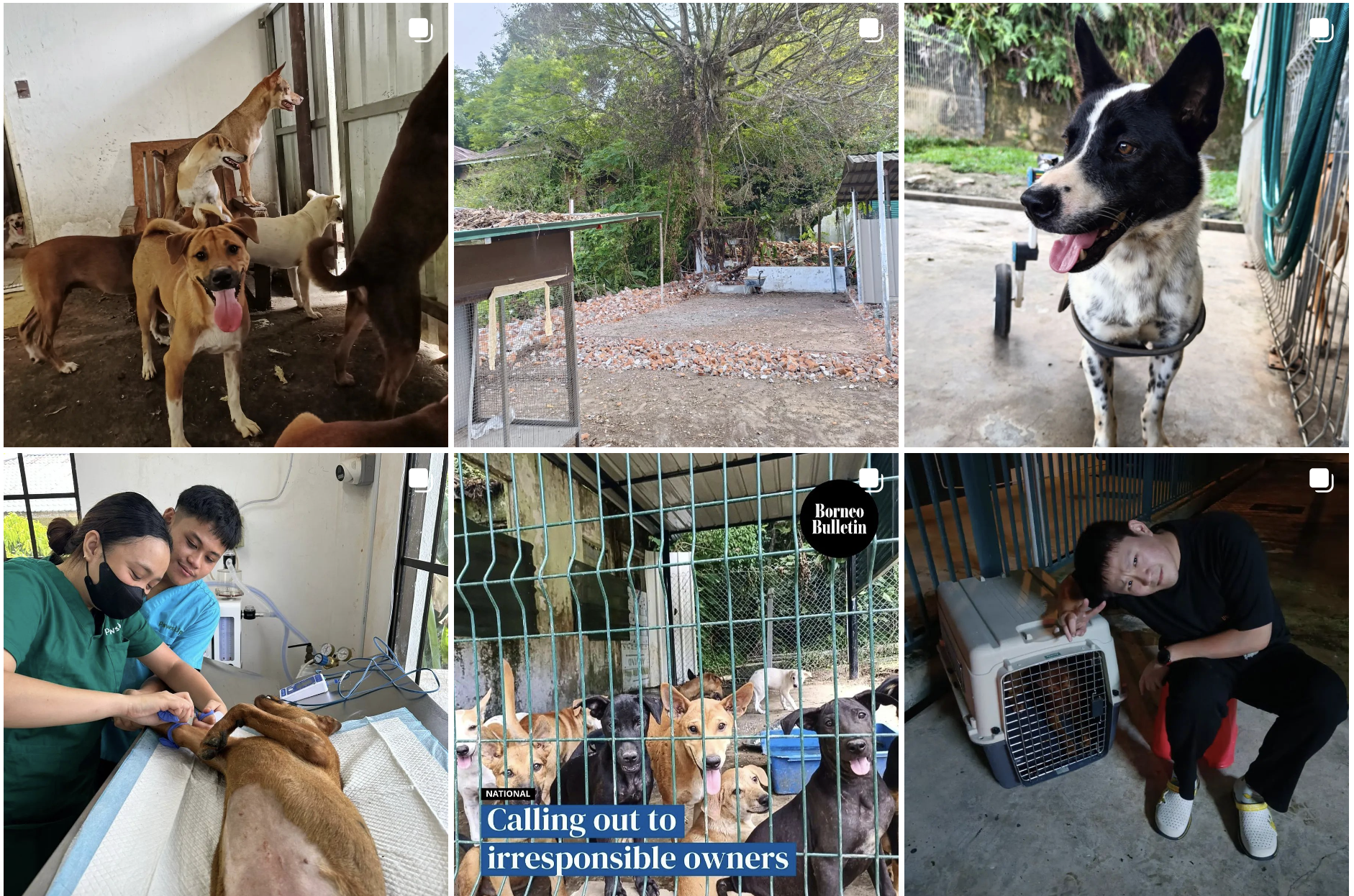
Right now, it is mostly volunteers carrying the load. Groups like PawsUp, Sejahtera Community, Care & Actions for Strays and Love Paws Sanctuary do trap, neuter, return work. They catch the dogs, sterilise and vaccinate them, then release them back where they were found. The dogs live out their lives without adding to the numbers. PawsUp, started by Jay Lau in 2021, has neutered over 600 strays, funded by people giving as little as B$2.99 a month. Sejahtera Community began in 2020 after a sad incident with a puppy on Tutong Beach, and it also teaches people to feed strays responsibly so the dogs are less aggressive.
But they are stretched thin. The stray population is about 10% of our human population, and these groups have limited people and money. Ada Ang of CAS has said that without a new approach, things could spiral. There is also hesitation within our own community. Some Malays worry about touching dogs or fear a religious issue if they help. Pengiran Nooraini of Sejahtera says attitudes are slowly changing, but education is still the key.
This is where government has to step in. Other countries have shown what works: catch the strays, keep them in a proper pound, and give them a chance at adoption. The NGOs already do this on a small scale with volunteers and donors. The difference is that the state can do it at scale, and fund it properly.
I will be honest, this part is uncomfortable. If a dog is not adopted after a set time, many places euthanise it. I do not like it either. But if we look at it from the dog’s point of view, a quick and humane end is arguably kinder than a hard life on the street. The pound would also be a place for adoption and for teaching people what it means to own a pet.
None of this works alone. We also need people to sterilise their pets, stop abandoning them, and treat animals decently. And we need our religious leaders and scholars in the conversation, so that whatever we do sits comfortably with our values.
In the end, it is not about getting rid of a nuisance. It is a shared responsibility for every creature around us.